My blog has moved!

You should be automatically redirected in 6 seconds. If not, visit
http://www.farwestchina.com
and update your bookmarks.

Thursday, December 17, 2009

Flattery or Manipulation: A Coffehouse Tale

*The following is a scheduled article.  Until noted otherwise, my ability to access the internet has been completely cut off*

Last year about this time my wife and I were invited to the grand opening of a local bakery/coffee shop. Usually we shy away from such invitations because in most cases our presence is a publicity stunt (we’re the only westerners in our city), but we agreed this time due to the owner being the mother of one of my students.

The celebration was quite larger than we expected and included a firecrackers display the likes of which I have never witnessed before (I posted a video of these Chinese firecrackers soon after). Also part of the festivities was a cake the size of a pool table nicely decorated and manned by an award-winning chef shipped in from Hong Kong to give the new place credibility. Medals hung from his neck as if he were some Olympic champion. While pictures of he and his cake were being snapped, we were “asked” – or rather pushed – to join him and smile. We grudgingly complied and quickly left.

Fast forward to last week when a friend and I decide to grab a cup of coffee one bitter cold afternoon. The moment we stepped into the shop, a place that I had been to a couple times before, a noticeable excitement began to fill the room. Ignoring these stares and whispers as an unusual amount of foreigner-fever we went upstairs and had our coffee. It wasn’t until our way back out that I realized what all the commotion was about.


Immediately next to the entrance of the shop was an enormous portrait of me, my wife and the now-absent chef from back in 2008 hung for all to see. To make matters worse, besides being surprised by a gigantic photo of myself, I realized that I had walked in one year later wearing the exact same winter garb. Fashion is not my middle name, I admit.

“That’s you, isn’t it?” the cashier asked me while pointing to the picture. I couldn’t very well deny it, so I smiled sheepishly while she and her workmates giggled. I ought to be paid for that obvious exploitation is what I wanted to say, but I decided to just let it go.

As it turns out, flattery isn’t the only means by which they decided to repay me…I also now get a hefty discount on my coffee!


Friday, July 10, 2009

The July 4th Incident: Revenge of the Angry Expats

I've mentioned this story once before on this site but I find it so amusing that I decided to share it one more time in light of America's Independence Day.  For any person who has lived in China during the Spring Festival you'll appreciate what these women were trying to do.  Absolutely true story.

----------------------------

Once upon a time, in a small town in the northern part of Xinjiang there lived two women who were English teachers.  Hardworking, dedicated, and reliable, these women usually stayed under the radar and provided no problems for the school or the local police bureau.  Nobody had taken the time to see that these women were frustrated, and they had spent much time prior to this July 4th planning to exact their revenge.

The anger began building earlier that year during the days leading up to and immediately following Spring Festival, also known as the Chinese New Year.  All throughout the country, for anywhere from three to seven days, the deafening sound of Chinese firecrackers (see an example video I posted earlier) reverberate off every wall in the city creating an almost unbearable coffin of noise.  Very few foreigners can live through this experience without complaining even a little or just leaving the country, but these women went a step further.

Pooling their resources they had the foresight to buy boxes full of the few remaining firecrackers in the city and store them away in their apartment for four months.  Forget the fire hazard, this was war.  On the outside these women were the perfect English teachers who had quickly adapted to expat life in China, but their closet spoke differently.

Four months later on July 4th these boxes of firecrackres came out of hiding and were unloaded in the small neighborhood courtyard.  Most of these local Chinese people had no idea today was a special day in America, but they were about to find out.  As lights began to turn off and people drifted to sleep, two matches were lit.

Then the noise began.  Bam! Pop! Crack-crack-cra-cra-crack!!

And it didn't stop.  Not for 30 minutes, and even then it wasn't because they ran out of firecrackers! The police had arrived as well as the school officials and practically the entire neighborhood.  Nobody was sleeping at this late hour due to the incredible racket the firecrackers had made.  These women were crazy, they could all agree on this, but what to do with them?

In the end the firecrackers were confiscated and everybody was sent home.  A warning was issued but no action was taken.  The battle may have been lost, but these two women demonstrated a resolve and a bravery not often found in your typical expat in China.  They told China what most of us here only wish we could say:

"We hate your noisy firecrackers!  The least you could do is make 'em look pretty."


Wednesday, June 17, 2009

Teaching Bus Passengers Driving Safety Laws

Last weekend my wife and I took a short trip out of our city to visit some friends in nearby cities.  Weather kept us from using our new motorcycle for this trip so we were forced to endure a bit of gruesome bus travel.  We've done this plenty of times before - frankly it's the best form of transportation within Xinjiang right now - but as a recently legalized "China driver" I took notice of some signs that have been put up in many of the Xinjiang bus stations.  The rules they convey are nothing new for any person who has a driver's license, but I found the pictures to be entertaining and interesting.

Even more interesting is the fact that all of these were posted in the waiting areas of the bus station.  Correct me if I'm wrong, but most people waiting in the bus terminal more than likely can't drive, right?  So then what's the purpose of teaching bus passengers not to drive when you're tired?  I couldn't tell if these signs were for the benefit of the drivers who might pass through or to educate the passengers to keep the driver accountable.  Either way, I found it entertaining.
  
Choose the Correct Lane
Lanes on a highway are arranged to maintain traffic flow.
 
Don't Exceed Seating Capacity
Exceeding the seating capacity is against the law and very dangerous.
  
Yield for Safety's Sake
It's common courtesy - drive friendly
  
Driving after Drinking is Strictly Forbidden
Drivers who don't drink live longer
  
Exceeding the Speed Limit is Dangerous
  
 Don't Drive Tired
The road is safer without sleepy drivers
  
Slow Down Around Corners
Cars taking corners too fast are bound to have an accident


Thursday, June 11, 2009

Crazy Chinese Health Notice Answers Lingering Questions

Ever wonder why you went bald?  Do you ever find yourself with a decreased vigor for life and can't explain why?  Did you suddenly go deaf without any prior symptoms?  How about an unexpected bloated belly or an intense case of diarrhea?  If any of these describes you, then I'm happy to say I finally have answers for you.

Yesterday morning I had a lovely little surprise sitting on my desk, a notice from our local health center.  I was about to throw it away when I noticed the title that had me instantly hooked:

20 Foods Which Shouldn't Be Eaten Together

I'd like to translate these twenty food combinations for you, including their purported effects, and in turn I want you to realize that this was not meant to be a joke.  These health officials are completely serious.  This notice was passed around the city in hopes that people would think twice before serving, let's say...rabbit meat and celery in the same meal.  Apparently, all your guests would walk away bald.  I'm doing you a favor here, so you might want to take some notes.
 
Just in case you think I'm making this up
 
  1. Pork + water chestnuts = a stomach ache
  2. Beef + chestnuts = vomiting
  3. Lamb meat + watermelon = a decreased vigor for life
  4. Dog meat + green beans = poisonous to the body
  5. Rabbit meat + celery = loss of hair
  6. Chicken + celery = a decreased vigor for life
  7. Goose meat + chicken eggs = a decreased vigor for life
  8. Turtle meat + amaranth (a nutritional herb) = poisonous to the body
  9. Carp + liquorice (not the candy) = poisonous to the body
  10. Crab + persimmon fruit = diarrhea
  11. Chicken eggs + saccharin = poisonous to the body, potentially fatal
  12. Brown sugar + preserved eggs = poisonous to the body
  13. White wine (白酒) + persimmon = chest pains
  14. Onions + honey = damaged vision
  15. Radish + fungus = dermatits (a skin disease)
  16. Bean curd + honey = makes you deaf
  17. Potatoes + bananas = (I can't figure the translation for this one...sorry.  Anyone willing to try it out and let me know its effects?)
  18. Bananas + sweet potato = a bloated belly
  19. Peanuts + cucumbers = harmful to the body
  20. Sweet potatoes + persimmon = lithiasis (formation of stones, such as the kidney stone)

So the question remains for me...how much of this should I take to heart?  Any ideas?

Update:  Thanks to a few commenters and some people on twitter I think that I can now say that #17 should correctly be translated as - "Potatoes + bananas = freckles".  Also, #15 should read "dermatitis", not "dermatits"...but since it's been commented on I'll keep it as is.

Monday, April 27, 2009

A Different Set of Values

Fake clothes. Pirated DVD's. Knock-off designer brands. Brand copy-cats. Shanzhai.

Despite the fact that all the genuine stuff we buy in the west is usually "Made in China", somehow the country itself has developed a reputation for fakes. It's a common theme for foreigners in China who both love to buy these cheap goods while lambasting the country for its poorly enforced intellectual property laws. So common, in fact, that the scene that played out in my neighborhood last Saturday completely threw me off-guard.

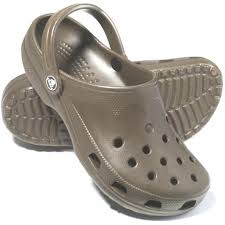
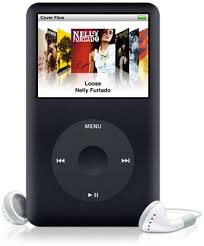
If you've been reading this blog for longer than a month you'll know that I love to play basketball (I learn special things about Chinese culture when I do).  Every Monday, Wednesday and Saturday I head to the gym to enjoy a couple hours of trying to put a leather ball into one of two iron rims.  In preparation for this wonderful exercise last Saturday I put on my genuine Adidas sweatpants, my genuine Adidas shirt, my genuine Crocs (I change into basketball shoes at the gym), and my genuine fitted cap bought in the US.  As I closed the door behind me I turned on my genuine iPod to play music that I had legally bought off of iTunes.  I'm not trying to brag. These few items represent some of the only quality products I own, the rest of which are Wal-Mart brand or Chinese-bought knock-offs.  I just happen to wear all my quality clothing at the same time that day.

As I walked outside under the warm sun sporting these quality brands for all to see I actually began to strut, thinking to myself "Man, I am hot stuff.  It's no wonder all the Chinese people look up to us westerners".  Those weren't my exact words, but it was the general idea.  Prideful, pitiful, stupid, and adolescent...I know.  Still, the point is that I felt pretty good about myself.

Pride comes before the fall, though, and my fall came quick.  Within two minutes my bubble was popped by two passing teenage boys who pointed at me and laughed.  I couldn't believe it.  Didn't they know how cool this Adidas clothing was? Did they realize how much money this iPod and all it's music represented?  I paid hard-earned cash to be this cool!  To be fair I don't know what they were laughing about - I could have had peanut butter hanging on my chin from the pre-workout sandwich I just ate - but the fact is that they laughed.

During the rest of my walk to the gym (sans strut) I couldn't stop thinking about what had just happened.  They weren't groundbreaking thoughts, mind you, but I thought I'd share some of them with you.  I think it's interesting how I expect the Chinese to give the same value to the things I have been told are valuable.  Examples:
  • My iPod: In China I can buy machines that play music, movies, and games while surfing the internet, teaching you English and making a pot of coffee - all for half the price, if not less.  Why should they be impressed with my iPod?
  • My Crocs: which cost close to $30, are seen as house slippers here that cost no more than $1 at the local market.
  • My fitted cap: This situation is interesting.  The tongue of a Chinese hat normally extends 3 inches longer than a western hat so everybody thinks my hat is too small for me, as if I'm wearing a child's hat.
  • Name-brand Clothing: Surplus weakens demand, so all the readily available knock-offs make my genuine Adidas clothing run-of-the-mill. Likewise, free MP3's make buying legal CD's nearly impossible.
For fun, I've also been thinking about things that the Chinese expect me to find valuable:
  • Shiny Shoes: If the plethora of sidewalk shoe-shiners are any indication, Chinese love to have shiny shoes. I wear sneakers and some leather loafers which couldn't shine if I wanted them to.
  • Cell Phones: Even the trash guy has a better cell phone than I do.  As long as it makes and accepts calls, it works for me.
  • Product Packaging: Obviously companies want to make their packaging look nice for consumers, but here in China it goes beyond what you see on the outside.  Multiple layers and unnecessary papers make it feel like I'm ripping into a giant graduation announcement.
Any others you would add?
 
All of this is changing as western companies make their way further east, but for now (at least here in the far west of China) all those expensive brands mean very little to my peers.  Tends to bring all that money I spent into perspective, you know?


Friday, April 10, 2009

Flying Kites in the Beautiful Xinjiang Spring

People here in Xinjiang, and for all I know possibly throughout the whole of China, seem to take their kite flying seriously.  It's really quite a spectacle that is made possible by the reliably windy weather marking the transition from winter to spring.  About three or four weeks ago vendors started setting up kite stands all along the road displaying the different colors and shapes that were available to purchase, kites which included the likes of Spiderman, the Fuwa (Olympic mascots), cool-looking fighter jets, and even some incredible dragon designs.
 
Kites weren't the only thing they were selling, though.  Of almost equal importance was the kind of string you have, how strong it is, and what kind of mechanism you use to keep it all in your hands and under control.  For almost the same price as a cup of coffee at Starbucks (which - I must note - is not located here in Xinjiang) you can walk away with a kite boasting a 7-foot wingspan that could fly so high you wouldn't be able to distinguish it from a bird.  Simply incredible.
 
In my naivety I thought this fascination with kites was limited to the younger generation like it is in America.  Nothing could be further from the truth.  While watching a kite flying competition at a local school last week I was surprised to find that a majority of kites were being flown by middle-aged or elderly men whose children were doing nothing but patiently waiting behind them, pointing out "their" kite to friends.  Nothing could break their intense concentration on that tiny flying spec in the sky.  Over 40 kites were being flown from a single soccer field filled with a couple hundred spectators and kite fliers.
 
Of course kite flying competitions have their casualties, too.  As if torn from the pages of the book "The Kite Runner" (whose subsequent film was actually shot in Xinjiang's western city of Kashgar), one of the objects of the competition is to be able to walk away with your kite in hand.  Although the kite lines aren't stuck with shards of glass, crossed lines are common and oftentimes result in lost kites.  At the altitude some of these kites are flying who knows where they'll land.
 
Walking away kite-less
 
I've attempted to fly kites with some of these people, but it never quite works out.  It's almost like going to Kenya and saying you're going to take a quick jog with some of the locals.  There must be some technique to it that I just don't get.  Usually I end up being the one who unintentionally crosses lines with another friendly kite flier, apologizing profusely for the inconvenience.  In the end, though, I'm at least happy to be a part of the spectacle, another colorful spot in Xinjiang's blue spring sky...
 
...even if my "spot" is usually making a speedy nose dive for the ground.
 
 
Additional Reading:
   *Grab a copy of The Kite Runner from Amazon
   *Read a great interview by Bruce Humes with the Chinese translator of The Kite Runner on the Paper Republic.


Wednesday, January 07, 2009

Buying Train Tickets on Spring Festival: A Migrant Worker's Guide

Getting your hands on good train tickets in any major Chinese city during the Spring Festival is without a doubt one of the most difficult tasks known to man. Right now tickets halls from Beijing to Shanghai to Xi'an are packed with people who wait countless hours in line for the chance to buy tickets to be with their families back home, an ordered chaos that is led primarily by a fearless group of people known as migrant workers. But what happens to those migrants workers who have moved to small cities in Xinjiang that don't have train stations? Since train tickets are not yet available for purchase on the internet or by phone, how exactly are they to get a hold of these invaluable tickets to freedom?

My home here in Xinjiang is one of those small cities filled with many of those fearless people and my wife and I just spent the last 48 hours finding out exactly how they get tickets.  It's not easy, it's not fun, and unless you are a migrant worker with no other option you should try to avoid it at all cost!  If you must, however, here is a brief migrant's guide to help you understand this crazy procedure.

Phase 1: Ticket Office Reconnaissance

Many moderate sized cities in China that aren't serviced by trains will usually have a train ticket office.  Two days ago my wife and I scouted out the location in our city - two separate and nondescript buildings near the local supermarket - while trying to figure out which train we needed and the process in which to purchase the tickets.  After questioning many different people near the office we began to faintly understand how the ticket system here works.

I think it goes something like this, at least here in Xinjiang: because there are so many people from all over the province who are desperate to get tickets home, a rationing system has been put in place whereby each local train office is allocated only a portion of a train's tickets a maximum of 10 days in advance.  Once those tickets are sold, which can take anywhere between 15-45 minutes, that's it for the day. People in Xinjiang are only able to physically purchase train tickets for trains departing from Urumqi, the capital city, and it's all on a first-come-first-serve basis.

Phase 2: Take a Number!!

Unfortunately this "first-come first-serve" business is a two-day process for most people, "most people" including us. Part one begins on the first day at office location #1, a plain, medium-sized hall with two doors, 200 chairs and a single TV. You don't come here to buy tickets today.  Instead you come to get a number giving you the right to stand in line the next day to buy a ticket.  People start to form a Chinese line outside the office (in other words, a big mass of people) at around 4a.m. in hopes of being given a number when they are handed out every day at 3:30p.m.  If you're counting, that's nearly 12 hours of waiting so far (in Xinjiang's frigid winter, no less) and you don't even have a real train ticket to show for it.

My first thought was, "How can people afford the time to wait that long!"  I then remember that many of these migrant workers are seasonal, such as the cotton pickers, and therefore have lots of time on their hands at the moment.  There are also many entrepreneurial types who will wait in line on behalf of somebody else for a fee.  We thankfully avoided both these options because we unknowingly garnered the sympathy of the one of the office workers who, when we arrived early that morning told us to just come back at 3:30 and he would save us a number.  Were it not for that man's sympathy we would not have tickets today.

Phase 3: Train Nazis and Train Tickets

This morning we woke up at 6a.m. in order to get in line to purchase our tickets at train office #2.  I actually went alone because each number can only be represented by a single person and that single person can only buy three tickets.  My first stop was office #1 where I witnessed something that very few people get to see in China - an actual line.

This line of people with "numbers" was made possible by a man I decided to nickname the "Train Nazi".  Loudspeaker in hand, I was convinced Mr. Train Nazi was ex-military as he barked orders and literally shoved people who didn't have tickets out the door.  I felt like a lucky kid with a golden ticket to Charlie's Chocolate Factory, except I wasn't excited - I was nervous.  What if they didn't have any train tickets for where I wanted to go?  Nothing was guaranteed and all of this would have been wasted time and effort.

For an hour I waited in line at building #1 as people who were taking part in today's Phase 2 were allowed to fill the room to wait for the next 3:30 ticket distribution. The entire time many people who didn't have numbers were badgering all of us in line to find out if we were using all three of our allotted ticket purchases.  If we weren't they would beg and bribe us fortunate souls with numbers to purchase a ticket for them and were prepared to hand over money, ID cards, and a piece of paper stating the ticket desired.  Although I personally didn't offer the services of my third unused ticket allocation, I witnessed a few people who did and I'm sure they made a small profit from it.

At this point, still a few hours before sunrise, we were led in a single-file line over to office #2 where we had to hand over our numbers before we would be allowed entrance by the guard at the door, another Train Nazi with an ex-military style attitude.  For the first time in this entire process while looking at two ticket counters in front of me I felt like I was actually buying a train ticket.  The place wasn't as packed as office #1 but it was still chaotic with guards shouting orders and people venting frustration after finding their train was already sold out.  My nerves would not be settled until I had two tickets in my hand.

These Tickets are GOLD!!

Thankfully our train hadn't yet been fully booked, so for the first time in three years of trying to take a train on Spring Festival we have successfully purchased tickets.  As interesting as it was, we won't be doing it again and from the stories we've heard might even regret this trip because of how crowded the train will be. No matter.  We saved a ton of money and the experience has not only given us a new appreciation for the life of migrant workers but also an insight into the value of Spring Festival train tickets.

According to my basic-level understanding of supply and demand - these tickets are GOLD!


Tuesday, December 23, 2008

Christmas Morning on "Xinjiang Time"

"If the Lord really wanted us to enjoy the sunrise, it would come no earlier than 10 a.m." Reader's Digest, May 2008

If you've ever thought something like that before, you ought to move to Xinjiang.  Most anybody who has traveled to Xinjiang has been informed of the "dual time zone" phenomenon wherein Beijing time is used officially here even though many minority groups hold to the true time zone.  If you're unfamiliar with this area, it would be like all of America, including Alaska, running on Washington D.C. time.  You just have to be conscious of where you are and who you're talking to when figuring which one to use.

China travel books make much of the fact that this area of China operates on two different clocks, as if those of us who live in Xinjiang wear two watches to keep our time straight.  The truth of the matter is that I rarely ever give it any thought during my daily life here.  The only time I ever find this "Xinjaing Time" annoying is during the winter, including this upcoming Christmas morning.

You see, this use of Beijing time means that during the summer the sun doesn't go down until 11pm (which is absolutely awesome!) but during the winter the sun doesn't rise until at least 10a.m. - and that's if the sky is clear.  Every morning that my wife and I walk to work, not only do we trudge a mile in the snow uphill but we do it in the pitch-black dark.  Sounds like a good story for the grandchildren someday, right?

Depending on how you look at it, for Christmas this late sunrise can be either a blessing or a curse.  For us big kids it's an opportunity to sleep in on Christmas morning yet still enjoy opening gifts at the crack of dawn - sweet!  For the real kids, including the Filipino children with whom we will celebrate Christmas this year, it means they'll have to wait until at least 10:30 a.m. before they can begin their Christmas morning.

Or maybe they'll wake us up at 8 a.m.  Who knows.  Either way, it's still gonna be another fun Xinjiang Christmas.  

Sunday, December 07, 2008

Chinese, Muslims and the Use of the Lunar Calendar

If you're in the mood for a minor headache today, I suggest you do a quick study of the lunar calendar and try to explain it to a friend.  Even the article I read in Wikipedia, which usually clears things right up for me, left me scratching my head.  The reason I mention this because there are two major groups in the world today who still use the lunar calendar - the Chinese and the Muslims - and both of these groups represent large portions of Xinjiang's population.  Over the next two months each of these groups will be celebrating a holiday determined on the lunar calendar.

Chinese New Year:

Although it is, without a doubt, the largest and most popular Chinese holiday, it's such a pain to figure out when it is exactly.  If you live in China or have Chinese friends you should have some fun and ask them when the Chinese New Year is this year to see if they can tell you the date.  Odds are they might be able to tell you a general time ("Uh...sometime towards the end of January, I think?"), but rarely the exact date.

Why is this so difficult?  While most Chinese are now beginning to live and work under the Gregorian calendar like the rest of the world, they continue to celebrate New Year based on their own lunar calendar.  This means that while the Chinese New Year is always somewhere in January or February, it's never the same day on consecutive years.  Very few people I know here in China keep up with the lunar date - check that, NOBODY I know here keeps up with the lunar calendar - so everyone waits for the government or the news organizations to tell them when to celebrate New Year's.  It's quite frustrating to figure out when the school year ends because it's never the same each year.

Muslim Corban Festival (aka Eid al-Adha):

The entire reason I'm talking about this today is because this Tuesday we will be celebrating the Corban Festival here in Xinjiang.  This festival is a public holiday for the entire province, meaning that while everybody else in China will be working Tuesday, all of us over here have the day off.  If you happen to be Muslim, you get Wednesday and Thursday off, too.  There's a lot to explain about the celebration of this holiday here in Xinjiang, but I'm going to hold off on that until this Tuesday when we get a little better grasp of it ourselves.

If you ask a Muslim, they might tell you that their holidays are on the same day every year - and according to the Islamic calendar (also a lunar calendar) they are.  But the difference between the Islamic and Gregorian calendar means that for those of us who aren't Muslims, all the Muslim holidays magically move about 11 days earlier each year.  If your math isn't too rusty you can easily calculate that this means that any given Muslim holiday makes its way through each of the 4 seasons every 33 years.  Back in 2000 this holiday we're celebrating on Tuesday was celebrated on March 16th. Interesting, huh?

At Least the Rest of Us aren't Crazy, Right?

All of this kind of makes my head spin, to be honest.  I'm a bit happy to know that next year all of my holidays will be easy to figure out.  Thanksgiving will still fall on the 4th Thursday in November, Christmas will still be on December 25th, the 4th of July will be on, well, you know, and Easter will be on...

...oh, shoot.  I guess we are crazy after all.

Tuesday, December 02, 2008

China and its Confusing Colors

During a discussion with some Chinese friends today we began to talk about computers, the internet and its effect on China.  During the course of this conversation I learned something new about Chinese colors I had never heard in my two and a half years here.  It went something like this:

"So Gary, what are your thoughts?"

"I think the internet is both good and bad.  It is good because I love to play computer games (a common pasttime here) but I think it is also bad because of all the yellow pictures" he said.

"Yellow pictures?"  I had an idea what he meant, but I wanted to make sure.

"Yea.  You know, yellow pictures and yellow movies" he replied while making some hand motions and beginning to blush.  It was now obvious he was referring to indecent pictures and inappropriate videos that even here in China are an epidemic despite efforts by internet censors.

"Oh, I see." I said, trying to ease his embarrassment.  "Yes, I agree with you that this is not a very good part of the internet."

It was interesting to learn this new meaning for yellow, but it doesn't quite make sense to me.  What about the Yellow River in China?  Or the Yellow Emperor, the legendary first emperer of China?  Seems that somehow this color, which at one time was used to describe people of Asian descent (even the surname "Huang" - meaning yellow - is a very common name), is now used to describe something inappropriate or offensive.  It's not a color association that we would make in America.

This isn't the first color difference I've run into since being here.  It seems that red, for example, is the primary wedding color for a bride's dress.  White, on the contrary, is many times used for mourning (although most Chinese brides still have a white dress as well).  It's backwards and confusing, but living in China and especially here in Xinjiang, we generally expect as much.

It's made me wonder, though...are there any other color associations not mentioned that are prevalent here in China?   In English we tell someone that they "look blue" today or that they are "red with embarrassment".  What other confusing Chinese color associations are there?  I'd love to know.


Monday, November 03, 2008

Why Lie? The Chinese Solution to Rejection

I was reminded yesterday of a small part of Chinese culture that I have had a hard time accepting over the years.  Anybody expat who lives here will probably know what I am talking about and I'm sure there are numerous China blogs that have touched on this subject in the past, but now it's my turn: I'm talking about the art of "Chinese lying".

The Party
 
To give you a small bit of background, Tiff (my wife) had planned a very nice Halloween party for all our friends and co-workers last weekend.  She put no small amount of effort into not only the party, but also the food, the costumes, and even the invitations she handed out.  Based on what people told us the week leading up to the party, turnout was going to be pretty good so Tiff would have to make a lot of food.  Yesterday, the day of the party, we spent most of the latter half of the day working, shopping, and preparing for that afternoon.

But as it happens, some mysterious sickness came over many people (who look perfectly healthy today, by the way), their bedtimes all-of-the-sudden changed (8pm...really?), or they got unusually busy for a Sunday night.  I guess we should be thankful that those people even called us five minutes before the party started like they did, because another handful just didn't show - they all simultaneously "lost" our numbers they told me today.  Let me clarify that neither Tiff and I are bitter about this as we had a grand time with all those who did show up, but I will admit that it was annoying.

Why "Lie"?

These people, most of whom we have been friends with over the last 2 and a half years, decided it would be much better for them "lie" to us by telling us they would come to the party and then "lie" to us again when they called to give their excuse.  I put the word "lie" in quotation marks because I sincerely doubt they think they are lying.  In fact, I have a feeling they think they are doing us a favor. It's wasn't until I was able to come to grips with this idea that my anger over these kinds of situations was able to change into just minor annoyance.

You see, it is my belief that our Chinese friends think rejecting our invitation at the moment we ask would cause us to lose face. The theory behind all this seems to be that if the party flops, we can at least say that we just had a city-wide outbreak of the flu so it's really not our fault. The same thing goes for Chinese weddings, which is why there is no RSVP.  I have never heard of anybody turning down a wedding invitation when passed out, but I have been to a couple weddings where multiple tables sat empty with food on them as if expecting guests who decided they couldn't make it that day.  That's just the way it is, and when you grow up with this way of doing things, it's not seen as wrong, only as the norm.

Turning the Tables

I run into problems, however, trying to figure out how to deal with this art of Chinese lying when I am the one who needs to reject an offer.  A man called us a few weeks ago asking for us to tutor his daughter on the weekends after we had already decided we weren't going to accept any more tutors.  Although in English saying a simple "I'm sorry, we're not accepting any more tutors" is acceptable, directly saying "no" to this man could have been taken as rude here, especially in our small town.  Our options were limited to a couple more acceptable things:
  1. Lie to him.  Tell him we'll think about it and call him back later...but never call him. We try to avoid this - it feels so wrong as a westerner to do this.
  2. Lightly brush him off.  Tell him we're not sure we have enough time for him, even though he and I both know we do.  We reject his offer without saying "no", but there's still a bit of awkwardness present.  We do this every once in a while but still find it uncomfortable.
  3. Redirect him with a counter offer.  This, in my mind, is the best option when available.  In this case we told the man that we had good friends who were looking to tutor and we would give them his number because we are very busy this year.  Here we can tell him "no" without being direct and yet still please him by partially satisfying his request.  This also doesn't force us to lie or tell partial truths that we really don't want to do.
The Pictures

So now that you know the story behind the party, here's a couple of pictures to let you see how a Halloween party in a small town in Xinjiang looks.  It's nothing like what you might find in Shanghai or Beijing, but we had a good time, and there were more people than is evidenced by these pictures.
It was a costume party, and Tiff was a cute mouse.
 
The fun and ever-popular mummy-wrapping game.


Pumpkin bowling with water bottles.
**Pictures of me and my costume have been purposely omitted for the sake of my pride.  If you have some unnecessary  desire to see my "Mr. Incredible" outfit, please contact me with a request so I can laugh at you and save my dignity for another day.


Sunday, September 14, 2008

Holiday Gifts, Chinese Style

Last week was Teacher's Day and today in China we're celebrating Mid-Autumn Festival Day. Yippee! The only real significance for us is two things: 1) we get Monday off from school, a major blessing considering it's our busiest teaching day and 2) we get gifts.

What kind of gifts do we receive, you might ask? Well...this year we received:
  • Two boxes of apples amounting to a total of 60 apples
  • Two boxes of milk with 20 pouches of milk each (that's right, milk comes in bags here, not bottles or jugs)
  • Two huge containers of cooking oil, which will take us all of a decade to finish up
  • One large bag of rice, two days after we just bought rice at the grocery store!
  • FOUR boxes of mooncakes, each individually wrapped, boxed, and bagged. If you're interested in a hilarious take on the Chinese mooncake tradition, you have to read this post. I wish I could explain to you the inconvenience of mooncakes, but this writer does it so well it doesn't make sense for me to try my own explanation.

Not a bad take, although not what you might expect in America. They're all useful gifts given by our employer - we think of it more as a bonus since we don't actually receive a monetary one. So anyway, happy Mid-Autumn Festival to all of you.


Sunday, June 15, 2008

China Gives Free Lessons on How to Cheer

I don't think I ever appreciated cheerleaders as a high school athlete. I'm ashamed to admit it even now and if I ever disrespected a cheerleader and you're reading this - I'm very sorry. It wasn't until I came to China that I realized how important they were - they don't just invite the crowd to cheer, they teach them how to cheer.

Watching Chinese athletics either in person or in on TV, the one thing you notice is an overuse of the single phrase" 加油!", which literally translated means "add fuel" but is the equivalent to our "Come on!" or "Go team!". Actually, calling it an overuse is an understatement. There is no other phrase in the Chinese language! That's all you can say to spur on your team to victory.

That's why when Beijing's Olympic Organizing Committee announced on June 5th "official" Olympic slogans and cheering routines, I couldn't help but laugh and think to myself "Well, better late than never." In essence, the committee has decided to teach people how to cheer.
So what do you say to teach people how to cheer? Let me give you a few examples straight from the BOOC, which I got from this article:

  • "Simple chants and gestures are the best way to cheer on your favorite sportsmen...these gestures include giving a double thumbs up or waving both arms with clenched fists." (see pictured example above if you're not sure what this might look like)
  • "All actions may be accompanied by several slogans."
  • If by chance you forget how to give the double thumbs up or clench your fists..."Volunteers will also be on hand to direct the crowds how to cheer."
Now don't lie to me and try to tell me you don't think that's not a little bit funny! They're actually hiring 30 cheering squads to be placed at all the different Olympic venues to show people how to cheer. Special training sessions are being held in schools where many of the 800,000 attendees are students. The cheering routines - which are made up of four steps - are supposed to be popularized with the spectators in the weeks before the Olympics through television broadcasts. If we see it we'll definitely let you know.

Friday, June 06, 2008

Chinese Massage Therapy Sucks - My Experience with Suction Therapy

I've tried a lot of crazy things in my life, I think. I've eaten things that most people wouldn't dare and tried things that the average person might be scared to do. I've tasted turtle, horse, dog, pig tongue, duck brain, etc; I love to rock climb, rappel, river raft, and gosh-darnit if I go to an amusement park I ride every roller coaster! Ok, so I'm not saying that I'm a daredevil - anybody who knows me could tell you that any risk I take has been meticulously calculated - however I do believe that I do have an above-average control of my fears.

I almost met my match last Wednesday when I faced my fear of the Chinese massage.

I know what some of you are thinking. "Massage!? I sure could use a massage! Why in the world would you be afraid of a massage?" Just wait. You'll be scared, too. This is no ordinary massage. No, sirree. This massage dates back almost 2,000 years and is rumored to be able to cure anything from a sore shoulder to the common cold. This particular type of massage therapy is well-know to most people all over China and can be found in decent massage parlors from Beijing to Karamay.

And it sucks. Literally.

I'll give you a general idea of the process of this therapy, even though its much easier to understand when watching the video below. After properly preparing the back by massaging oil on it for 5 minutes or so, a series of round, glass balls - or "cups" as I will now refer to them - are placed on the back. A moment before placement a small fire is lit inside the cup and soon removed to heat up the air inside. Once the cup makes contact with the skin on your back the hot air creates a vacuum that sucks your skin far into the glass globe. This method, known formally as "flash-fire cupping", feels about as good as it sounds to be honest, but better yet it does a smash-up job of leaving a hickey on your back the size of a small pancake. Once the cups are secure you must allow them to suck at your skin for 10 minutes. As you can tell in the photo below, I got 18 of them (there's one on my right shoulder barely visible if you're counting).
So here's the short story of how and why - questions that I would be asking if I were you right now. The man you see standing next to me in the picture above, Cons, is a friend who has been having some back difficulties. When we talked with a Chinese friend about it, he recommended this therapy which is supposed to (as I mentioned before) ease back pain and cure the common cold. He had back pain, and even though I didn't have a cold to put that crazy notion to the test, I couldn't pass up the opportunity. All three of us agreed to meet on Wednesday and subject ourselves to this "therapy".

I can now tell you that true male bonding only happens when you're half-naked having your back sucked into what feels like a hundred tiny glass balls. You don't get much closer than that.

I was the last person to get the cups, and as I sat there watching the grimaces on the faces of my "cupping" buddies, I can't lie and tell you that I didn't almost back out. You pay for pain with this therapy on the promise that it will make your life better in the days to come - and I don't normally pay for pain! It's too early to tell you how effective this method is physically, but it is already effective in giving my new "conquered fears" list some pizazz:

Fears I have conquered:
1) Eating pig brains
2) Rappelling a high rock face
3) Receiving 18 hickeys by fire-breathing suction cups

Who's a daredevil now?


Blog Widget by LinkWithin