


The stereotypical Uyghur is poor. According to many, their low economic status in China’s resource-rich province of Xinjiang is the driving force behind the region’s instability. Few Uyghur have the opportunity to leave Xinjiang and those who do can typically only find low-paying food industry employment (see: Beijing & Shanghai).
But what about those Uyghur who, against all odds, become professionals in their field, respected and reasonably paid. What do they think about China and how do they feel about Uyghur/Han relationships?

A Rich Uyghur Ancestry
Mansur’s grandparents on both sides of the family started off wealthy. While his father’s parents earned their fortune in the fields, his mother’s parents became successful traders. Both lived in a small town named Qitai (“Kunshet” in the Uyghur language), located just outside the Xinjiang capital of Urumqi.Neither set of grandparents were very well educated nor could they speak Mandarin. At the time, such qualifications weren’t necessary to make a good living. For decades they diligently toiled and saved, unaware that everything they had worked for was about to be taken from them.
“I Can’t Say…I Just Can’t Say”
While Mansur is usually very open and frank about his life, like most Uyghur there are certain topics and periods in history that cause him to timidly smile and change the subject.Such was the case for the robbery of both his grandparents. According to him, throughout the 1960’s they were systematically robbed of all their money and possessions. When prodded as to who did this or why, the only answer he could muster was a sideways glance, a sheepish smile and a simple, “I can’t say…I just can’t say”.
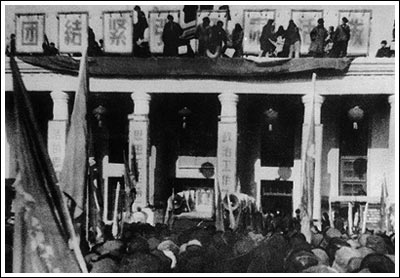
Although his grandparents never recovered financially, their children eventually married and in 1971 their first son was born: Mansur.
A Uyghur’s Journey to Gainful Employment
For the first two decades of his life, Mansur studied little Mandarin. At that time few Uyghur did. In fact, before graduating from high school he had to take his exit exams in Uyghur and only then began to realize that his only option for upward mobility would be to learn the Chinese language.So he moved and for two years he studied Mandarin in Lanzhou, capital of the neighboring Gansu province, before finally becoming proficient enough to pass exams to get him into medical school in Nanjing.
When he arrived back in Xinjiang he was fortunate to land a job at the local hospital. One of only two minority doctors, he is careful to add again. In the meantime he married and had his own son whom he introduced with the English name “Matt”.
Shifting Gears
At this point, having finished with the past, Mansur shifts to the present. While detailing the difficulties he faces as a Uyghur doctor in a Han society that is daily gaining majority, he also reveals why, despite his good income, he has every intention of moving his son out of China.Because of the length of this article, it is being posted in two separate installments. Please look for the rest of Mansur’s story tomorrow.
Other Xinjiang Interviews:
An Oil Worker: Xinjiang Personal Portraits
An English Teacher: Xinjiang Personal Portraits


8 Comments:
Josh
The Urygur where not the only one's to be robbed 40-60 years ago.
Certain Han Chinese lost huge amounts of wealth and property.
My wife's family being one of them.
I agree with you completely, Damo. Uyghur and Han suffered alike. I hope I didn't imply otherwise in my article above, I was just pointing out that the Uyghurs were affected as well.
Thanks for pointing this out. I'd be curious how much your parents-in-law have actually told you about this period in time.
Were they tight-lipped or did they speak openly?
incredible portrait. i LOVE this. thank you for sharing his life - challenges and joys - with us!
Coming from a history of privileged class
[wealthy ancestor] whether they have kept it or lost it,adds motivation and pressure to succeed and certain skills or upbringing that helps the future generation to succeed as well.
Jessie...thanks so much. He was a pleasure to interview.
Anon - I agree with you, but then again there is a whole lot of pride that goes behind every Uyghur you meet. It may not be pressure to succeed financially, but it is pressure to uphold the dignity of the Uyghur name.
Josh
If I am not wrong, from the way you present this article... it seem like it’s rather rare to see ethnic Uyghur working in professional field like a doctor…
But I remember seeing some Uyghur doctors were being interviewed in Xinjiang hospital during the riot last year and even some Chinese policemen are being ethnic Uyghur.
From some of your other articles which I read, it give me the impression that ethnic Uyghur are being rather discriminated in Xinjiang by the Han Chinese and they are just like the 2nd class citizen… is that true?
Josh
Like all Chinese my father and mother in law do not freely talk about many things you have to coax information from them hard when they don't speak any English and I speak very little mandarin.
They have told many things about the time they came to Xinjiang 40 years ago and occasionally they would bring out photos of there daughters from 30 years ago.
My mother in law and her family came from Gansu(they had property there that was taken from them) and my father in law family from Tibet.They met in south Xinjiang near Hotan when Chairman Mao decided Xinjiang was to be well more populated and young(18/20 years olds)where sent to Xinjiang youth communist camps?You can see all this in Shihezi museum.One extremely tough time imange going through a xinjiang winter basically living in a tent or a hole in the side of a hill with basic clothes as we know it even getting drinking water was a huge task as everything was frozen.
They say they enjoyed there time in that period.Must have been tough though.
I met a Chinese academic who in the 70's spoke out to much about Mao in the wrong ways(he was originally from down south)
He was sent to prison in Xinjiang and there he sat for 15 years.Alot of people died there simply because the diet they where given was totally inadequate and in the winters they where given just one blanket.
I met him at a Christmas party in Sydney four years ago.His daughter finally moved to Australia and got him out.
He was just sitting in the sun with a aurora of peacefulness about him.Still wearing the Mao clothes and cap.
He didn't like to talk to much about those days as he said "what is past is past."
He passed away last year in his nineties.One tough old bugger.
@Anon - I wouldn't go so far as to say that seeing a Uyghur professional in Xinjiang is "rare", but when you compare the number of professionals against the actual Uyghur population I think it's fair to say that it is alarmingly low.
Discrimination in this kind of ethnic situation is inevitable, but hopefully the government can start enacting laws that will curb the effects of unfair hiring practices.
@Damo - Yea, that story sounds typical of the ones I heard only a couple people tell. It's amazing to me how every one of them has an innate desire to sweep all of it under the rug instead of being proud of how they were able to overcome such adversity.
Some of them aren't so lucky as to be able to enjoy the nice Australian sun! Sorry to hear of his passing.
Post a Comment
Comment Guidelines:
*Comments that do not abide by these guidelines will be deleted*